 01233 740529


Special Offers
Redeem Offer Code
Redeem Gift Voucher
Scarecrow Members

Our Feedback
I would just like to tell you that i have planted some of your peas, which grow up to 6 ft high. Well they are now producing, and they are wonderfull, i will definatly be buy more next year. Thank you very much. Reading one of your feedbacks i would like to see more info on your packets. I do think it would help. Thank you very much. P. Duerdoth.
Mrs. P. Duerdoth, Staines
Close Social & Offers
Special Offers
Redeem Offer Code
Redeem Gift Voucher
Scarecrow Members
Our Feedback
I would just like to tell you that i have planted some of your peas, which grow up to 6 ft high. Well they are now producing, and they are wonderfull, i will definatly be buy more next year. Thank you very much. Reading one of your feedbacks i would like to see more info on your packets. I do think it would help. Thank you very much. P. Duerdoth.
Mrs. P. Duerdoth, Staines
Sloe Bush
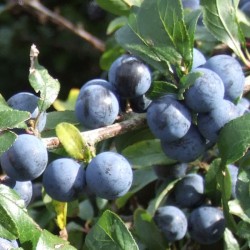


Prunus spinosa
- Sometimes known as Blackthorn.
- Clouds of white flowers are followed by the astringent blue-black fruits.
- Ideal for jams, jellies - and of course Sloe Gin.
- Will reach 16 feet but best kept to 6-8 feet.
- Self Fertile.
Supplied as a pot grown plant approximately 2 feet (60 cm) tall including pot.
This Product is Available Now.1 or more £7.95GBP each. Group & quantity discounts

Description
Sometimes known as Blackthorn, it is actually the fruit of the bush that is known as the sloe.
The Sloe bush, Prunus spinosa, produces small plum-like fruits known as 'drupes' in autumn. These sloe fruits (which are often mis-described as berries) are usually added to gin (along with a sizeable amount of sugar!) or vodka, and make a great addition to homemade preserves.
A native to the UK, these are often found growing wild in hedgerows and scrub land - but for those wanting to guarantee a supply of Sloes (or should that be homemade sloe gin?) there is no better way than planting a few.
Sloe bushes make excellent impenetrable hedges due to their vicious spines on the stems (hence thorn in the name).
Prunus spinosa can be grown as a sloe bush if pruned at 6 -8 feet in height, or left to its own devices will reach around 16 feet (5 metres) tall.
In April and May they are covered in clouds of pretty bowl-shaped white flowers which, come the Autumn, will result in a heavy crop of those all important blue-black fruits. We find it better to let the fruits have a frost or two before picking as this will sweeten the fruit ever so slightly - worth considering when making jams and jellies and wedon't recommend are eaten raw!
These really are a bit of England's heritage. The wood was a favourite in times of old for making magical wands and divining rods; in more recent times it has been said it makes the best walking sticks.
Its medicinal uses are also legendary. It is said a tea made from the leaves is a mild purgative and will also help with bladder problems and bronchial problems; the fresh juice from the fruit is said to help throat infections - but as they are so 'sharp' we think you'd have to be feeling pretty poorly to try that!
- Left to their own devices they will grow up to 16 feet (5 metres) tall.
- Can be kept pruned to (and we would suggest maintaining) at 6 - 8 feet (1.8 - 2.4 metre) tall bush.
- Planted 2 feet (60cm) apart they make an excellent hedge.
Recommended by the RHS to be an excellent attractant and nectar source for bees and other beneficial insects.
Disclaimer
As with all alternative medicines and plants with purported medicinal benefits it is important to inform your health care providers that you are using them; this helps to ensure safe and coordinated care. We can accept no liability for any side effect or contingency from any allergy or any other cause or harm that may arise. If in doubt please do consult a medical practitioner before using.

How To...
How To Plant & Grow Soft Fruit
Information on unpacking and planting bare root and pot grown soft fruits either in the open ground or in containers and pots, with additional information on specific varieties.
Recipes
Sloe Gin Recipe
A traditional recipe for making sloe gin that can easily be adapted for making other fruit gins or vodkas.
General Information
Pollinator Friendly Plants
A detailed guide to the seeds and plants sold by Victoriana Nursery Gardens that will attract and provide a food source to bees and other beneficial pollinating insects.
Related Products
If buying Sloe Bush you may find the following items of interest... Elderberry Bush
 The Lazy Foragers Plant Collection
 The Country Wine Plant Collection