Victoriana Nursery Gardens Logo
Fuchsias
Vegetable Seeds and Plants
Herb Seeds and Plants
Water Gardening
Medicinal and Healing Plants
Garden Plants
Hedging Plants
Fruit Trees and Nut Trees
Soft, Bush and Cane Fruits
Grape Vines
Exotic Fruits
Books and Magazines
Plant Care and Garden Tools
Gifts For Gardeners

Trading Policy
Ordering Methods
Carriage Charges
Links
Downloads
Site Map
Home About Us Visiting Us Contact Us Catalogue Request FeedBack

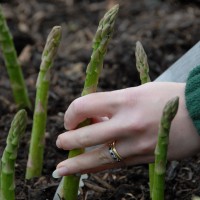
Asparagus Plant 'Jersey Knight'

Asparagus Plant 'Jersey Knight'

Asparagus officinalis 'Jersey Knight'

This is a superior variety of Asparagus that produces premium quality spears up to 2cm thick. Cropping potential is enormous and whilst it is what is termed as an F1 Hybrid for uniformity of growth the plants are grown under our ‘nature’s way’ conditions.

It has a high tolerance to Fusarium, Crown and Root Rot.

Up to 20 years cropping can be expected making this a highly profitable variety in every way for amateur and smallholder alike.

See what Grow It magazine had to say about our Jersey Knight Asparagus in their article Succulent Spears

Supplied as compost block grown plants (not bare root crowns).


Asparagus Plant 'Jersey Knight'

Qty

Prices for this product - 10 or more £1.65 each 20 or more £1.50 each 50 or more £1.35 each 100 or more £1.05 each
This Product may be purchased in units of 5; the minimum quantity of this product you may purchase is 10.

This Product is Available Now.

How To Grow Asparagus 'Jersey Knight'

Plant out anytime of the year, weather permitting.
Plant out 9" or further apart in rows 18" apart.
Do not cut (harvest) in the first year and do not be too greedy in the second year either!

Succulent Spears

Costing a fortune at restaurant prices, asparagus is surprisingly easy to grow with the Jersey Knight variety giving a particularily good crop says Paul Peacock

Asparagus varieties, from the aptly named ‘Eros’ to the royal ‘Jersey Knight’ basically have one thing in common. They push shoots up in the spring, some of which we can steal and eat, while the rest grow into a filamentous plant that resembles fennel to look at, if not to taste. It has been grown for over 2,000 years, first by the Greeks and then by the Romans, who valued it both as a food and for its medicinal properties. It’s interesting to note that the way we grow asparagus these days was invented by Roman gardeners, and hasn’t changed in all those years.
Once classed as a member of the lily family, asparagus has the far-reaching and branching root system common to this group but instead of having bulbs, as in the onion, or corms as in garlic, it spreads itself underground by means of rhizomes. A rhizome is an underground stem which grows horizontally, throwing off roots and shoots at various points. Although the whole plant is edible, we only eat the young shoots. Recently, scientists have put asparagus into a group of its own.
When fully established the modified leaves on this plant make it look like a huge fern and it’s very decorative, especially when the rain catches as tiny beads in the foliage, reflecting shafts of light like little diamonds.

Yielding results
Asparagus has two sexual forms; the male plant bears pea-sized flowers that are yellow or white and the female has much smaller flowers that are frequently yellow. Some people remove the flowers saying they are trying to ‘save the energy for the whole plant’, but there’s really no need to do this. The main point of interest for us, in the kitchen garden, is that female plants tend to produce larger shoots, or ‘spears’, than the male, but male plants produce a greater overall yield.
A bed of asparagus consists of between 10 to 20 plants that, once established, will produce around one kilo of spears per plant each year, and this should continue for around 20 years before the plants need to be replaced. Jersey Knight is a particularly good cropper, giving a ready supply of 2cm spears from its second year. It also has a good tolerance to fusarium and crown and root rot.

Preparation
When you buy asparagus you will find a tangled mass of roots attached to a little rhizome that’s usually very hard to spot, nestled in the compost. Jersey Knight can be planted at any time of the year but it’s generally best to plant all varieties in the spring, before the growing season gets underway.
Give the soil a good digging over to improve the drainage and add at least a spadeful of compost to each square metre of soil, mixing well.You can plant the crowns at 20cm intervals with 40 cm between each row. There are two common ways of planting the plants, which at this stage are called ‘crowns’.You can either dig a 15cm deep trench, lay the crowns at the appropriate intervals, covering them with compost-rich soil, or you can dig 15cm deep holes and plant in these. Spread the roots out from the crown, than cover and firm down the soil.

Patience
The plant doesn’t produce spears that are worth eating for at least a year. It’s important that you let the plants grow so that in the second year they can produce stronger spears. They need to be kept well watered through the summer, but make sure that when you prepared the soil you really did ensure good drainage, as standing in water will rot the crowns.
You must also keep the plot well weeded, but this can cause a problem. Indiscriminate use of the hoe might damage the delicate crowns, so weeding by hand and mulching with compost is an important means of control.
In the autumn, from September onwards, the ferns begin to yellow and fall and at this point you can cut them off at the base and put them on your compost heap to tidy your plot. When you have done this add a good couple of inches of compost to act as a winter mulch, which will keep the weeds down and also add nourishment to the soil. If you can get well-rotted poultry manure, or buy some organic ‘6X’ pelleted poultry manure, you’ll find the plants grow more successfully because they adore lime.
In the April following planting, and every year afterwards, water in a good organic fertiliser to give the plants a lift of nutrients as they start growing. The liquid run-off from a wormery is perfect for this (see our Compost feature, p29).

Harvesting
Most asparagus beds will be ready to harvest sometime in May. It might be a little earlier in the south and well into June in the north.
Never cut all the shoots. With one-year-old plants only pick a third of them, and thereafter leave around 15% of the asparagus to nourish the root system for future years’ cropping. The time to cut is when the shoots are about 10cm above ground and while the tip is still tightly closed. Harvesting usually continues over about four weeks.
The best way to pick them is with a sharp knife. Hold the spear in one hand and find the base of it just under the soil with the blade of the knife. Cut the spear under the soil, being careful to avoid damaging the crown. It is possible to buy special asparagus knives which have a curved blade, allowing you to pull under the soil to release the spear.
Nothing tastes better than asparagus eaten with butter just hours after it’s been picked, so don’t wait to use them. The following day will provide a whole fresh crop of spears for you to enjoy, so May-time becomes a serious treat. After harvesting, give the remaining spears an extra feed of organic fertiliser and then make sure they never want for water through the whole summer.

Pests
Varieties produced since the Second World War have built-in resistance to asparagus rust. This is a fungal infection that looks like brown spots or smudges on the growing stems. You rarely get this problem these days, but a spray with Bordeaux Mixture or another organic copperbased fungicide protects against most fungal infections.
If the shoots turn yellow early, and the outside of the stems is nibbled all the way round, you’ve had a visit from the asparagus beetle. This is a rare event, but the beetle and its grubs eat the stems and the leaves. If this happens, don’t compost the dying leaves, but burn them. Similarly, burn the surviving leaves at the end of the year. Hand-pick the beetles off the crop as they appear in spring, which should keep them at bay, but you could spray with an organic insecticide to be on the safe side.

Paul Peacock is editor of Grow It magazine...the full as printed magazine article can be viewed here - Succulent Spears – Grow It May 2007

Visit the Grow It magazine website for more information on this excellent magazine or purchase the latest copy here