 01233 740529


Special Offers
Redeem Offer Code
Redeem Gift Voucher
Scarecrow Members

Our Feedback
Thank you very much for your very prompt service. i put in the order for a medlar on sunday evening and received it, healthy and nicely wrapped, on tuesday morning. It's brilliant!
I would not hesitate to recommend you.
Jessie Saunderson, Wigton, Cumbria
Close Social & Offers
Special Offers
Redeem Offer Code
Redeem Gift Voucher
Scarecrow Members
Our Feedback
Thank you very much for your very prompt service. i put in the order for a medlar on sunday evening and received it, healthy and nicely wrapped, on tuesday morning. It's brilliant!
I would not hesitate to recommend you.
Jessie Saunderson, Wigton, Cumbria
Soft Fruit
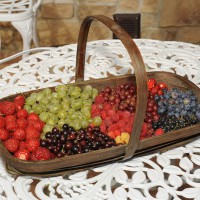
Liven up your garden borders and add a productive quality to your ornamentals with the addition of soft fruits into your planting scheme.
We have many easy-to-grow, flavoursome soft fruit varieties, from strawberries suited to hanging baskets through to thornless hybrid berries - all tried, tested and selected by us here at Victoriana. More...
If we had the time and you had the inclination, we could write several volumes on soft fruit! But all you need to know about our assortment of soft fruit is that we've put a great deal of time and effort into providing you with what we believe to be the choicest selection of each soft fruit variety.
Most of the soft fruits in our listing can easily be accommodated in a garden border, bringing an interesting twist to your ornamental planting scheme. For example, how about a hybrid berry that not only looks the part of a stunning climber, but also fruits after it flowers? Or perhaps a pretty spring-flowering shrub that, in summer or autumn, produces a wealth of juicy berries for a satisfyingly refreshing dessert or smoothie?
With our range of soft fruits, you can take your planting scheme to a new level and enjoy the combined benefits of a plant that flowers and fruits, even if space is at a premium. That's because, without exception, all of our soft fruits are suitable for growing in pots or containers - and of course our Rambling Cascade Stawberries are wonderful in hanging baskets!
Although we choose our soft fruit varieties primarily based on their flavour, you will also find that many of the varieties that we do list have some practical growing characteristics. For instance, in our soft fruits listing, most of the hybrid berries we offer now have a thornless 'option' - great news for those who don't relish the prospect of being shredded whilst picking! And with several varieties of primocane raspberry in our range, complicated pruning need not be a worry!

Bilberry Plant

Slated to be the next 'new' super fruit. A popular fruit amongst foragers. Closely related to the Blueberry though the fruits are smaller. Self fertile.
Available Now
Supplied as a pot grown plant approximately 6" (15 cm) tall including pot.

Blackberry Plant 'Black Butte'

Should perhaps have been called Black Brute due to the exceptional size of the blackberries it produces! Good for eating and cooking. Self Fertile.
Available Now
Supplied as a pot grown plant approximately 12" (30 cm) tall including pot.
Blackberry Plant 'Black Satin' (Thornless)

Thornless Blackberry. Juicy black rounded fruits from early August. Heavy cropping. Vigorous and very reliable. Self Fertile.
Available Now
Supplied as a pot grown plant approximately 2 feet (60 cm) tall including pot.
Blackberry Plant 'Karaka Black'

A fairly new blackberry variety from New Zealand. Exceptionally long and large shiny black fruits are really flavoursome. Self Fertile.
Available Now
Supplied as a pot grown plant approximately 12" (30 cm) tall including pot.
Blackberry Plant 'Loch Ness' (Thornless)

Thornless Blackberry. Compact and erect growing. Produces large fruits late in the Season. Perfect for the smaller garden. Self Fertile.
Available Now
Supplied as a pot grown plant approximately 2 feet (60 cm) tall including pot.
Blueberry Bush 'Bluecrop'

Very vigorous habit and high yielding. Excellent resistance to Spring frosts as well as Summer droughts. Harvest late July / August. Self Fertile.
Available Now
Supplied as a pot grown plant approximately 2 feet (60 cm) tall including pot.
Blueberry Bush 'Goldtraube'

Fruits early July onwards. Heavy cropping and very reliable. Large blue fruits are packed full of flavour. Puts on an excellent Autumn leaf colour display.
Available Now
Supplied as a pot grown plant approximately 2 feet (60 cm) tall including pot.
Blueberry Bush 'Hortblue Petite'
Self fertile. Fruits twice a year with delicious blueberries, so worthwhile growing. A compact variety that produces large dark fruit.
Available Now
Supplied as a pot grown plant approximately 2 feet (60 cm) tall including pot.
Blueberry Bush 'Jersey'

One of the oldest and most trusted varieties of blueberry. Heavy crops of medium sized dark blue berries late July / August. Particularly good for cooler regions.
Available Now
Supplied as a pot grown plant approximately 2 feet (60 cm) tall including pot.
Boysenberry

A cross between a Loganberry and Blackberry. Large juicy black fruits taste like a sweet blackberry. Very strong and vigorous habit. Self Fertile.
Available Now
Supplied as a pot grown plant approximately 2 feet (60 cm) tall including pot.
Cape Gooseberry

A papery husk hides the gorgeously sweet fruits of this lovely shrubby plant. Known by many names including the Golden Berry and Jam Fruit.
Available Now
Supplied as compost block grown plants.
Chocolate Vine
A rambling and scrambling climber that produces pretty chocolate-scented purple flowers that are followed by unusual sausage shaped fruits. Semi Evergreen.
Available Now
Supplied as a pot grown plant approximately 2 feet (60 cm) tall including pot.
Chokeberry 'Hugin'
Pretty white Spring flowers are followed by an Autumn crop of dark black berries. A beautiful shrub in its own right with stunning Autumn colour. Self Fertile.
Available Now
Supplied as a pot grown plant approximately 2 - 3 feet (60 - 90 cm) tall including pot.
Chokeberry Bush 'Viking'

Hardy and self fertile. Pretty white Spring flowers are followed by an Autumn crop of large black/purple berries which are great for juice or jam. Has stunning Autumn leaf colour.
Available Now
Supplied as a pot grown plant approximately 2 feet (60 cm) tall including pot.
Chokeberry Bush 'Nero'

Hardy and self fertile. Nero reaches about 4 feet tall with large black berries and has stunning red Autumn foliage. Fruits make lovely pies, jams, jelly and wine.
Available Now
Supplied as a pot grown plant approximately 2 feet (60 cm) tall including pot.
Cranberry 'Early Black'

A popular American variety of Cranberry. Produces large juicy red-purple fruits from late August. Possibly the earliest fruiting variety. Self Fertile.
Available Now
Supplied as a pot grown plant approximately 18" (45 cm) tall (including pot).
Elderberry Bush

Masses of heavily scented cream flowers are followed by heavy trusses of tiny black fruits in the late Summer & Autumn. Perfect Wine, Cordials and Elderflower Champagne!
Available Now
Supplied as a containerised plant approximately 2 feet (60 cm) tall including pot.
Elderberry Bush 'Haschberg'
This variety is popular in Europe because of it's high yields and ability to copy with colder temperatures. Reaches a maximum of 10 feet tall. Partially self fertile.
Available Now
Supplied as a containerised plant approximately 2 feet (60 cm) tall including pot.
Gooseberry Bush 'Captivator'
Sweet red berries, this virtually thornless variety is extremely hardy, bred in Canada and well worth growing.
Available Now
Supplied as a containerised plant approximately 12" - 18" (30 - 45 cm) tall including pot.
Gooseberry Bush 'Xenia'
Sweet red gooseberry that is virtually thornless. Produces a lovely upright bush shape and is high yielding with good mildew reistance.
Available Now
Supplied as a pot grown plant approximately 12" - 18" (30 - 45 cm) tall including pot.
Gooseberry Bush 'Pax'
A virtually thornless, vigorous growing gooseberry with amazing red fruit that is so sweet you can eat it straight from the bush! Can be trained if you wish.
Available Now
Supplied as a pot grown plant approximately 12" - 18" (30 - 45 cm) tall including pot.
Honeyberry
Purported to contain 5 times more antioxidants than Blueberries. Purple-blue berries are formed early to mid Summer. Drought resistant and extremely hardy.
Available Now
Supplied as a pot grown plant approximately 2 feet (60 cm) tall including pot.
Japanese Wineberry

Unbelievably sweet orange-red to dark red berries of delicious flavour. Vigorous and upright habit. Self Fertile.
Available Now
Supplied as a pot grown plant approximately 2 feet (60 cm) tall including pot.
Kiwi 'Atlas'
Male variety that can pollinate up to 8 females. A climber with pretty creamy/white flower with red/brown stems and green heart shaped leaves.
Available Now
Supplied as a pot grown plant approximately 1 - 2 feet (30 - 60 cm) tall including pot.
Kiwi 'Hayward'
Female variety that produces hairy brown kiwi fruits with a green inner. A lovely climber clusters of creamy/white flowers with green heart shaped leaves.
Available Now
Supplied as a pot grown plant approximately 1 - 2 feet (30 - 60 cm) tall including pot.
Kiwi 'Issai'
Baby Kiwi / Hardy Kiwi. Smooth, thin skinned, green fruits dotted white. Has a huge cropping potential with 1000 fruits in a year not unusual. Self Fertile.
Available Now
Supplied as a pot grown plant approximately1 - 2 feet (30 - 60 cm) tall including pot.
Kiwi 'Jenny'

Hen egg sized fruits are produced in abundance. A very vigorous climber with attractive stems and large green leaves. Self Fertile.
Available Now
Supplied as a pot grown plant approximately 1 - 2 feet (30 - 60 cm) tall including pot.
Kiwi 'Jumbo'
Baby Kiwi / Hardy Kiwi. The largest fruiting variety of all the Baby Kiwis. Produces oblong, juicy, yellow green fruits in late September. Female (requires a male pollinator).
Available Now
Supplied as a pot grown plant approximately 2 feet (60 cm) tall including pot.
Kiwi 'Ken's Red'
Baby Kiwi / Hardy Kiwi. Large red skinned fruits have juicy red flesh making this variety of Baby Kiwi stand out from the rest of the crowd. Female.
Available Now
Supplied as a pot grown plant approximately 2 feet (60 cm) tall including pot.
Kiwi 'Weiki'
Baby Kiwi / Hardy Kiwi. An excellent pollinator for female Baby Kiwis, with the added benefit of being extremely ornamental in its own right. Male.
Available Now
Supplied as a pot grown plant approximately 2 feet (60 cm) tall including pot.
Mountain Cranberry

Also known as Lingonberry or Cowberry. Masses of tiny red berries are produced twice a year. Low spreading habit. Evergreen. Very hardy. Self Fertile.
Available Now
Supplied as a pot grown plant approximately 8" (20 cm) tall (including pot).
Raspberry Cane 'Glen Coe'
Summer fruiting (Floricane). Self Fertile. Delicious, intense dark purple fruit with a more bush / clump forming habit than usual raspberry canes. Great for jams and sauces too.
Available Now
Supplied as pot grown canes in 2 litre pots.
Red Currant Bush 'Rondom'

A very prolific variety of red currant. Produces long strigs of pale red berries that have an exceptional flavour and pleasantly firm texture. Self fertile.
Available Now
Supplied as a pot grown plant approximately 2 feet (60 cm) tall including pot.
Sloe Bush

Sometimes known as Blackthorn. Clouds of white flowers are followed by the astringent blue-black fruits. Ideal for jams, jellies - and of course sloe gin.
Available Now
Supplied as a pot grown plant approximately 2 feet (60 cm) tall including pot.
Strawberry 'Rambling Cascade' Hanging Basket Kit

A complete kit to produce a hanging basket that will literally drip with strawberries! Runners from the plants can hang down as far as 6 feet (1.8 metres). Self-fertile.
Available Now
Supplied as a complete kit consisting of the moss-covered ball-shaped basket pre-filled with our own mixed growing medium and 13 young plants of our fabulous Rambling Cascade Strawberries.
Strawberry Plant 'Cambridge Favourite'
From 1938 this delicious old, high-yielding variety will not disappoint. With an amazing flavour, firm and high-yielding fruit, mid season, it really is a must-grow (and so easy).
Available Now
Supplied as good-sized bare root plants.
Strawberry Plant 'Malwina'

A late-season variety. Deep glossy red fruits have a gorgeous sweet flavour. Withstands rain well and has a good tolerance to disease. Self fertile.
Available Now
Supplied as good-sized bare-root plants.
Strawberry Plant 'Rambling Cascade'

Large, bright red strawberries have a real taste-of-old flavour. Runners can be up to 6 feet (1.8 metres) long, making this variety perfect for hanging baskets or training to climb. Self fertile.
Available Now
Supplied as 7cm pot grown plants.
Strawberry Seed 'Sweet Temptation'

Possibly the cheapest way to establish your own strawberry bed. Produce heavy crops of sweet and juicy fruits on compact plants. Self-fertile.
Available Now
Supplied as a packet of approximately 25 seeds.
Tayberry 'Buckingham' (Thornless)

The most exciting new hybrid berry for many years - a tayberry without spines! Large purple red fruits have a pleasantly sharp flavour. Excellent cold tolerance. Self fertile.
Available Now
Supplied as a pot grown plant approximately 2 feet (60 cm) tall including pot.
Tummelberry

A fairly new hybrid berry. Produces large rounded fruits with a bright red colour and superb flavour. Heavy cropping and excellent winter hardiness. Self fertile.
Available Now
Supplied as a pot grown plant approximately 2 feet (60 cm) tall including pot.
White Currant Bush 'White Pearl'

Excellent flavour and heavy cropping. Pale yellow fruits are firm and juicy and sweet enough to eat raw when fully ripe. Self fertile.
Available Now
Supplied as a pot grown plant approximately 2 feet (60 cm) tall including pot.
White Currant Bush 'Blanka'
Self fertile. This white currant is thought to be the highest yielding of all white currants with good flavour, large berries and long strings. Fruits freeze well.
Available Now
Supplied as a pot grown plant approximately 2 feet (60 cm) tall including pot.
Woodland Strawberry
A delicious little alpine strawberry with an amazing flavour. Easy to grow and should be in everyones garden!
Available Now
Supplied as compost block grown plants approximately 5" (13 cm) tall.
Blackberry Plant 'Oregon Thornless'

Thornless Blackberry. Highly ornamental foliage and attractive autumn colour. Produces heavy crops of rounded black fruits that are lovely and juicy. Semi-Evergreen. Self Fertile.
Currently Not Available To Purchase - Available from - SOLD OUT UNTIL NEXT YEAR - 2025
Supplied as a pot grown plant approximately 1 foot (30 cm) tall including pot.
Blackcurrant Bush 'Ben Lomond'

Heavy crops of glossy black fruits. A reliable and strong growing variety that fruits fairly late in the Season. Rarely damaged by frost. Self Fertile.
Currently Not Available To Purchase - Available from APPROXIMATELY mid June
Supplied as a bare root plant approximately 2 feet (60 cm) tall including roots.
Blackcurrant Bush 'Ebony'

The sweetest blackcurrant of all! Can be eaten from the plant without the need for sugar. Very early cropping and large fruits. Self Fertile.
Currently Not Available To Purchase - Available from APPROXIMATELY mid June
Supplied as a bare root plant approximately 2 feet (60 cm) tall including roots.
Currant Bush Collection

An excellent gift for the pudding, jam and jelly maker! Consists of one of each - blackcurrant, red currant and white currant. All are easy to grow. All are Self Fertile.
Currently Not Available To Purchase - Available from APPROXIMATELY late November / early December
Supplied as bare root plants pruned to approximately 2 feet (60 cm) tall including roots.
 More information...
Goji Berry Plant

First introduced to the UK in the 1600's, so not quite the new superfruit that many believe they are! Fresh fruit is gorgeously sweet. Easy to grow and can even be used for hedging.
Currently Not Available To Purchase - Available from APPROXIMATELY late April / early May
Supplied as potted plant approximately 8" - 10" (20 - 25 cm) tall including pot
Gooseberry Bush 'Hinnonmaki Red'

Eating / Cooking Gooseberry. Bright red berries are sweet and aromatic. Mildew resistant. Self Fertile. Mildew resistant.
Currently Not Available To Purchase - Available from APPROXIMATELY mid June
Supplied as a containerised plant approximately 12" - 18" (30 - 45 cm) tall including pot.
Gooseberry Bush 'Hinnonmaki Yellow'

Eating / Cooking Gooseberry. Sweet and aromatic golden yellow fruits. Excellent Winter hardiness. Mildew resistant. Self Fertile.
Currently Not Available To Purchase - Available from APPROXIMATELY mid June
Supplied as a containerised plant approximately 12" - 18" (30 - 45 cm) tall including pot.

Gooseberry Bush 'Invicta'

Eating / Cooking Gooseberry. Large yellow-green fruits have a really good flavour. Vigorous and reliable with good disease resistance. Self Fertile.
Currently Not Available To Purchase - Available from APPROXIMATELY mid June
Supplied as a containerised plant approximately 12" - 18" (30 - 45 cm) tall including pot.
More information...
Jostaberry Bush

A hybrid cross of a Gooseberry and a Blackcurrant. Purple black fruits can be cooked or eaten raw when fully ripe. Excellent pest and disease resistance. Self Fertile.
Currently Not Available To Purchase - Available from APPROXIMATELY mid June
Supplied as a pot grown plant approximately 2 feet (60 cm) tall including pot.
Loganberry 'Ly 654'

Cross between a Raspberry and Blackberry. The thornless clone of the best known of the hybrid berries. Delicious cone-shaped berries have a pleasant sharpness.
Currently Not Available To Purchase - Available from - We Need To Check Stock
Supplied as a pot grown plant approximately 2 feet (60 cm) tall including pot.
Raspberry Cane 'All Gold'

Autumn fruiting (Primocane). The best of all the yellow raspberries! Sweet golden fruits almost crumble in your hand when picked. Canes are spined. Self Fertile.
Currently Not Available To Purchase - Available from APPROXIMATELY November
Supplied as bare root canes pruned to approximately 12" (30 cm) tall.
Raspberry Cane 'Autumn Bliss'

Autumn fruiting (Primocane). Mid dark red fruits have a pleasant flavour. Berry size remains fairly constant through the season. Canes are spined. Self Fertile.
Currently Not Available To Purchase - Available from APPROXIMATELY November
Supplied as bare root canes pruned to approximately 12" (30 cm) tall.
Raspberry Cane 'Autumn Treasure'

Autumn fruiting (Primocane). Large bright coloured fruits have a gorgeously sweet flavour and very little acid - and keep well. Excellent disease resistance. Canes are spine free. Self Fertile.
Currently Not Available To Purchase - Available from APPROXIMATELY November
Supplied as bare root canes pruned to approximately 12" (30 cm) tall.
Raspberry Cane 'Glen Ample'

Summer fruiting (Floricane). A high-yielding mid-season variety that produces large berries with good flavour and colour. Canes are spine free. Self Fertile.
Currently Not Available To Purchase - Available from APPROXIMATELY November
Supplied as bare root canes pruned to approximately 12" (30 cm) tall.
Raspberry Cane 'Malling Juno'
Summer fruiting (Floricane). An early fruiting variety which is medium to large in size with good firmness and lovely flavour. Self fertile.
Currently Not Available To Purchase - Available from APPROXIMATELY November
Supplied as bare root canes pruned to approximately 12" (30 cm) tall.
Raspberry Cane 'Malling Minerva'
Summer fruiting (Floricane). An early fruiting variety which produces heavy yields of good sized flavoursome fruits with excellent keeping qualities. Canes are spine free. Self Fertile.
Currently Not Available To Purchase - Available from APPROXIMATELY November
Supplied as bare root canes pruned to approximately 12" (30 cm) tall.
Raspberry Cane 'Tulameen Pearl'
Summer fruiting (Floricane), Mid season variety. Hybrid of Tulameen with large, delicious, red fruit. High yielding and easy to grow with amazing results and not many prickles either.
Currently Not Available To Purchase - Available from APPROXIMATELY November
Supplied as bare root canes pruned to approximately 12" (30 cm) tall.
Red Currant Bush 'Rovada'

A late fruiting red currant. Produces outstanding crops of large bright red berries on long strings. Superb flavour. Self fertile.
Currently Not Available To Purchase - Available from APPROXIMATELY mid June
Supplied as a pot grown plant approximately 2 feet (60 cm) tall including pot.
More information...
Soft Fruit Plant Collection

A yummy collection of easy soft fruit that makes an ideal starter pack for the would be fruit grower. All are easy to grow. An ideal combination for those wanting to make pies, puddings and jams - or just eating!
Currently Not Available To Purchase - Available from APPROXIMATELY late November / early December
Supplied as bare root canes and pot grown plants.
Strawberry Plant 'Royal Sovereign'

Dating back to 1892, this really is a heritage strawberry. Medium-sized fruits have a juicy taste of yesteryear that really is special. Self-fertile.
Currently Not Available To Purchase - Available from - SOLD OUT UNTIL NEXT YEAR - 2025
Supplied as good-sized bare root plants.
Tayberry

A cross between a Blackberry and a Raspberry. Consistently produces heavy crops of dark red juicy fruits. Copes well with colder climates. Self fertile.
Currently Not Available To Purchase - Available from - We Need To Check Stock
Supplied as a pot grown plant approximately 2 feet (60 cm) tall including pot.
The Ultimate Raspberry Cane Collection

A fine gift for the raspberry lover that will ensure a plentiful supply of raspberries throughout the summer and autumn season. Self fertile.
Currently Not Available To Purchase - Available from APPROXIMATELY late November / early December
Supplied as bare root raspberry canes approximately 12" (30 cm) tall.
More information...
Thornless Berry Plant Collection

No prickles or thorns make this combination of berries easy to pick! All are easy to grow. An ideal combination for puddings, jams - or jellies.
Currently Not Available To Purchase - Available from APPROXIMATELY late November / early December
Supplied as pot grown and / or bare root plants (subject to time of year).
Traffic Light Gooseberry Plant Collection

As the name suggests, a selection of Gooseberry plants that will fruit in all the colours of traffic lights (well nearly!). All three varieties are reliable croppers and have good disease resistance. Self fertile.
Currently Not Available To Purchase - Available from APPROXIMATELY late November / early December
Supplied as pot grown and / or bare root plants (subject to time of year).
More information...
Tumbleberries

Delicate sized woodland strawberries have a lovely sweet flavour all to their own. Perpetual fruiting, these bear good yields over a long period. Self fertile.
Currently Not Available To Purchase - Available from - We Need To Check Stock
Supplied as compost block grown plants approximately 5" (13 cm) tall.